










Preventing knee ligament tears involves strengthening the quadriceps and hamstrings to improve joint stability, practising proper jumping and landing techniques, and avoiding fatigue during sports. Warm-ups, appropriate footwear, and maintenance exercises are key for long-term joint health.
Call Us +65 6884 6788
(Ask for Dr Ong)
DR. ONG KEE LEONG
Knee Ligament Tear Singapore
Knee ligament tears occur when one or more of the strong bands of tissue that stabilise your knee joint are stretched beyond their limits and partially or completely tear. These injuries typically happen during sports, accidents, or sudden twisting movements, leading to immediate pain, swelling, and instability. The knee has four main ligaments—the ACL, PCL, MCL, and LCL—each playing a specific role in stabilising the joint during different movements. Depending on which ligament is affected and the severity of the tear, recovery can range from a few weeks of rest to several months following surgical repair.
Book AppointmentSymptoms of Knee Ligament Tears
The symptoms of a knee ligament tear can vary depending on which ligament is injured and how severely it’s damaged.
- Immediate sharp pain at the time of injury, often followed by a dull ache
- Swelling developing within a few hours, limiting motion
- Instability or a “giving way” sensation, especially with ACL injuries
- Popping sound or feeling during the injury event
- Difficulty bearing weight or walking
- Stiffness and reduced range of motion
- Bruising that may spread down the leg
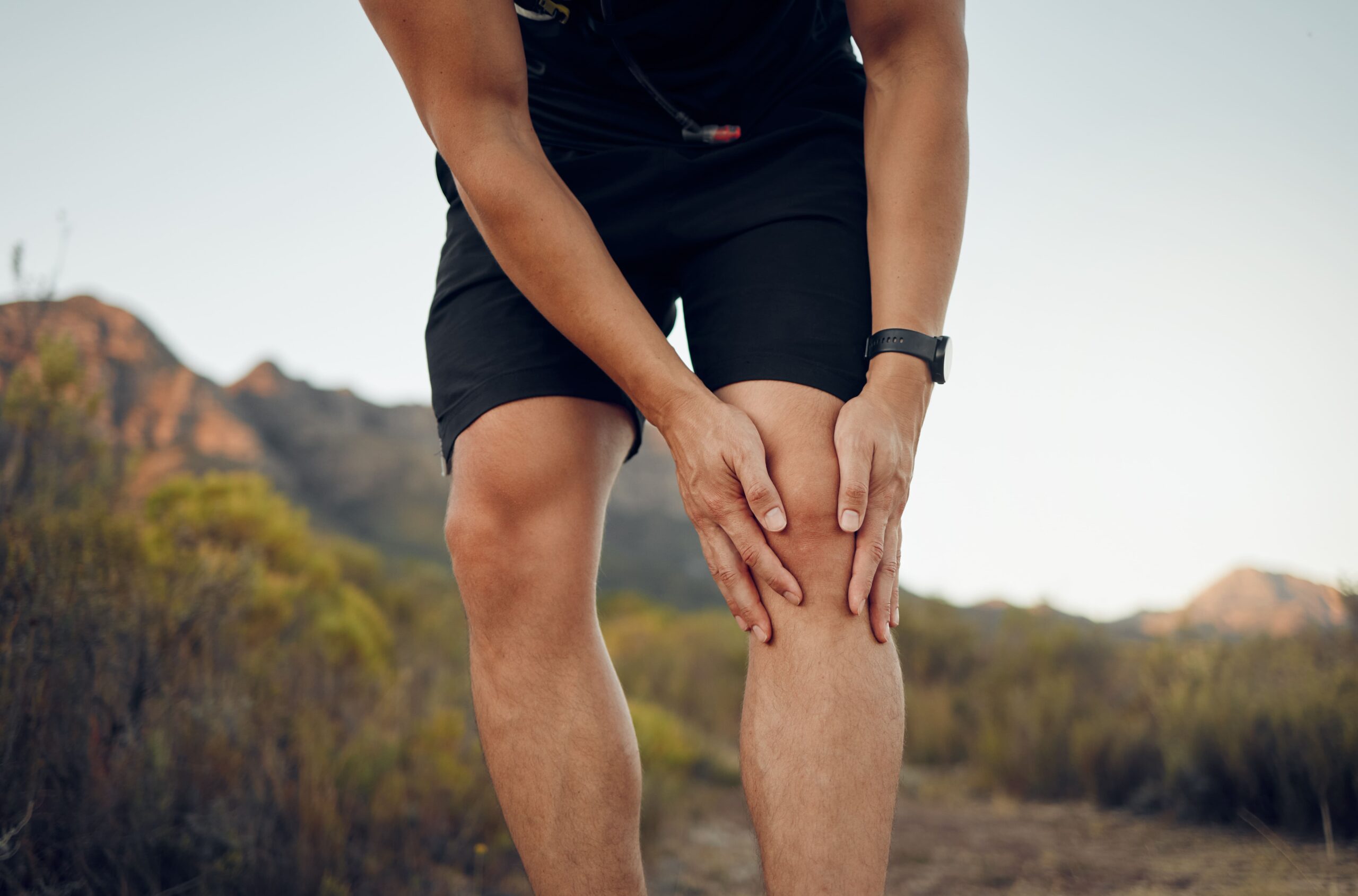
Causes and Risk Factors of Knee Ligament Tears
Knee ligament tears can result from various activities and movements, with certain factors increasing your likelihood of experiencing this injury.
- Sports involving jumping, cutting, or collisions (e.g., football, basketball, skiing)
- Sudden changes in direction or pivoting on a planted foot
- Direct impact to the knee from falls or accidents
- Landing awkwardly from a jump or on uneven surfaces
- Previous knee injuries leading to instability
- Muscle imbalances around the knee joint
- Female gender (higher ACL risk due to differences in anatomy, ligament laxity, and muscle firing patterns)
- Poor conditioning or fatigue during intense activities
Frequently Asked Questions
Can I return to sports after a ligament tear without surgery?
Many people with partial tears or certain complete tears (especially MCL) can return to sports after proper rehabilitation. The timeline varies from 6-12 weeks depending on severity and which ligament is affected.
How can I tell if my knee ligament is torn or just sprained?
A sprain is actually a partial tear of the ligament. Complete tears typically cause more severe instability and swelling, but only proper medical examination and imaging can determine the exact extent of injury.
Will I develop arthritis after a knee ligament tear?
While ligament injuries do increase the risk of knee arthritis later in life, proper treatment and rehabilitation can minimise this risk. Maintaining a healthy weight and staying active with appropriate exercises helps protect the joint long-term.
How long before I can drive after ligament surgery?
Most people can drive once they’re off crutches and can comfortably control the pedals, typically 4-6 weeks for the left knee or 6-8 weeks for the right knee. Your surgeon will advise based on your specific recovery.
Medisave & Insurance Shield Plan Approved
For Singaporeans & Singapore Permanent Residents
Types of Knee Ligament Tears
Knee ligament tears are classified based on which ligament is affected and the extent of the damage.
Anterior Cruciate Ligament (ACL) Tears
The most common serious knee ligament injury, often occurring during sports involving jumping or sudden stops. ACL tears frequently require surgery for active individuals as this ligament doesn’t heal well on its own.
Posterior Cruciate Ligament (PCL) Tears
Less common than ACL tears, these typically result from direct impact to the front of the knee. PCL injuries often heal without surgery as this ligament has better blood supply than the ACL.
Medial Collateral Ligament (MCL) Tears
These occur from blows to the outer side of the knee, pushing it inward. MCL tears often heal well with conservative treatment due to good blood supply to this ligament.
Lateral Collateral Ligament (LCL) Tears
The least common isolated ligament injury, usually caused by force pushing the knee outward. LCL tears are often associated with damage to other knee structures.
Grade Classifications
All ligament tears are further classified as Grade 1 (mild stretching), Grade 2 (partial tear), or Grade 3 (complete tear). This grading helps determine treatment approach and expected recovery time.
Combined Injuries
Multiple ligaments can tear simultaneously, such as the “unhappy triad” involving the ACL, MCL, and meniscus. These complex injuries typically require more extensive treatment and longer recovery.
Why Do Patients Choose Dr Ong Kee Leong?
- Dr. Ong Is Passionate In Sports, Giving Him A Deep Understanding Of Sports-Related Injuries And How They Can Be Treated
- Personalised And Professional Approach To Deliver High-Quality Orthopaedic Care Based On The Most Up-To-Date Literature
- Detailed Aftercare Plan To Ensure Smooth, Long-Term Recovery
- Fellowship Trained Surgeon With 15 Years Of Experience In Orthopaedic Conditions
- Problem-Oriented, Well-Organised and Individualized Treatment Plans Catered To Your Specific Needs
- Specialist In The Management Of Sports Injuries And Degenerative Conditions Of The Shoulder And Knee Joints
- Knowledgeable And Pleasant Clinical Staff To Assist You With Your Every Need Detailed Aftercare Plan To Ensure
- Our Care Is Conveniently Accessible At Mount Elizabeth Novena and Farrer Park Hospital
- Minimal Waiting Time For Initial Consultation
- Assistance With Medical Claims (e.g. Medisave & Integrated Shield Plans)


About Dr. Ong Kee Leong
Senior Consultant, MBBS (Singapore), MMed (Ortho), FRCSEd (Ortho)
Dr Ong Kee Leong is a senior consultant orthopaedic surgeon with subspecialty training in shoulder, knee, and arthroscopic sports surgery.
- Completed a fellowship in Germany, gaining focused, hands-on exposure to complex joint conditions beyond the scope of general orthopaedic practice.
- Served as Director of Sports Service at Changi General Hospital, managing a wide range of sports-related injuries in both recreational athletes and national-level competitors before entering private practice.
- Subspecialty focus on shoulder and knee conditions, including arthroscopic (keyhole) surgery.
Hospital & Clinic Affiliations
Dr Ong practises at a clinic in Singapore with access to accredited hospital facilities for surgical procedures. Patients have access to diagnostic imaging (X-ray, MRI, and ultrasound), day surgery facilities for arthroscopic procedures, and structured rehabilitation services.
Please contact the clinic directly for the current practice address, nearest MRT station, and details of affiliated surgical facilities.
Patient Care Philosophy
Dr Ong’s clinical approach is grounded in a single principle: exercise and sports are highly beneficial for long-term health. This reflects a genuine belief that physical activity is central to long-term health, and that the goal of orthopaedic care is to return you to the activities that matter to you, not simply to resolve your imaging findings.
In practice, this means prioritising joint preservation wherever possible. Rather than moving quickly to joint replacement or highly invasive procedures, the focus is on treatments that protect and restore the body’s natural structures.
Every plan is shaped by what you want to do with your body, whether that is returning to competitive sport, running at weekends, or simply walking without pain.
Beyond acute treatment, Dr Ong incorporates injury prevention and load management guidance into his consultations. Understanding why an injury occurred, and how to modify training to reduce the risk of recurrence, is part of the long-term care approach.
Treatment Options for Knee Ligament Tears in Singapore
Conservative management is often successful for partial tears and certain complete tears, particularly of the MCL and PCL. Surgery is typically recommended for complete tears of certain ligaments, particularly in active individuals who wish to return to sports or have persistent instability despite conservative treatment.
Non-Surgical Treatment
- Rest and Activity Modification: Initial treatment involves avoiding activities that stress the injured ligament while maintaining gentle movement to prevent stiffness.
- Physiotherapy: A structured rehabilitation programme focusing on restoring range of motion, strength, and stability.
- Bracing: Hinged knee braces provide support while allowing controlled movement during healing.
- Injection Therapy: Platelet-rich plasma (PRP) injections are sometimes used to potentially enhance the healing of partial tears. Corticosteroid injections may be used in the acute phase to manage pain and inflammation.
- Pain Management: Includes ice application, elevation, compression, and appropriate pain medications. Anti-inflammatory drugs may be used short-term to control swelling and discomfort.
Surgical Treatment
- ACL Reconstruction: The torn ligament is replaced with a graft, usually taken from your hamstring tendons or patellar tendon. The new ligament is secured with special fixation devices and gradually incorporates into the knee over several months.
- PCL Reconstruction: Similar technique to ACL reconstruction but often requires different graft positioning due to the PCL’s location. Surgery is less commonly needed as many PCL tears heal adequately without operation.
- MCL/LCL Repair or Reconstruction: For severe tears that don’t heal with conservative treatment, the ligament may be repaired if torn recently or reconstructed using grafts. These procedures are less common as most collateral ligament tears heal without surgery.
- Multi-ligament Reconstruction: When multiple ligaments are torn, surgery may address all injuries in one procedure or be staged over time. These complex reconstructions require careful planning and extended rehabilitation.
- Arthroscopic Techniques: Most ligament surgeries are performed using keyhole techniques with small incisions. This approach typically results in less pain and faster recovery compared to open surgery.
Have an enquiry about your condition or a certain treatment?
Fill up the form and we will get back to you soon!
Make An Enquiry

Prefer to talk? Call our clinic directly to make an enquiry at (65) 6884 6788
(Please ask for Dr Ong Kee Leong)
our clinics
Visit Us Today
Mt Elizabeth Novena
- 38 Irrawaddy Road #06-59/60/61 Mt Elizabeth Novena Specialist Centre Singapore 329563
- klong@sog.sg
- (65) 6884 6788
- (Ask for Dr Ong)
- (65) 9652 5022
-
Mon – Fri : 9:00 am – 5:00 pm
Sat : 9:00 am – 1:00 pm
other practice locations
Farrer Park Hospital
- 1 Farrer Park Station Road #14-06 Connexion Singapore 217562
- klong@sog.sg
- (65) 6884 6788
- (Ask for Dr Ong)
- (65) 9652 5022
-
Mon – Fri : 9:00 am – 5:00 pm
Sat : 9:00 am – 1:00 pm
Mt Alvernia Medical Centre
- 820 Thomson Road #07-53 Mt Alvernia Medical Centre D Singapore 574623
- klong@sog.sg
- (65) 6884 6788
- (Ask for Dr Ong)
- (65) 9652 5022
-
Mon – Fri : 9:00 am – 5:00 pm
Sat : 9:00 am – 1:00 pm
"Moving your body the way nature intended is a freedom not well appreciated until it is lost. We are passionate about getting you back in the game, and staying in the game. Our team is fully committed to returning you to the life and activities you love."
Dr. Ong Kee Leong
Prevention and Management
When to See an Orthopaedic Specialist
You should consult an orthopaedic specialist if you experience knee pain after an injury, notice instability or swelling that doesn’t improve within a few days, or hear a “pop” during activity. Early diagnosis and treatment by an orthopaedic surgeon in Singapore can improve recovery and help prevent long-term damage.
Diagnostic Methods
Physical Examination
Your doctor will perform specific tests to check each ligament’s integrity, such as the Lachman test for ACL tears or valgus stress test for MCL injuries. They’ll also assess swelling, range of motion, and areas of tenderness.
X-rays
While ligaments don’t show on X-rays, these images help rule out fractures and check for bone fragments that sometimes break off during ligament injuries.
MRI Scanning
This provides detailed images of soft tissues including ligaments, cartilage, and menisci. MRI can show the exact location and extent of tears, helping plan treatment approach.
Ultrasound
Sometimes used for MCL and LCL injuries as these ligaments are close to the skin surface.
Arthroscopy
This procedure involves inserting a small camera into the knee joint through a small incision. It can be used for both diagnosis when imaging is unclear and for the surgical repair of torn ligaments.
Related Articles

Knee pain when bending is a common issue that can affect people of all ages. A knee pain specialist can help identify the underlying cause when symptoms persist or interfere with daily activities. Whether it occurs while squatting, climbing stairs, or sitting down, this discomfort can interfere with daily activities. This article explores common causes […]
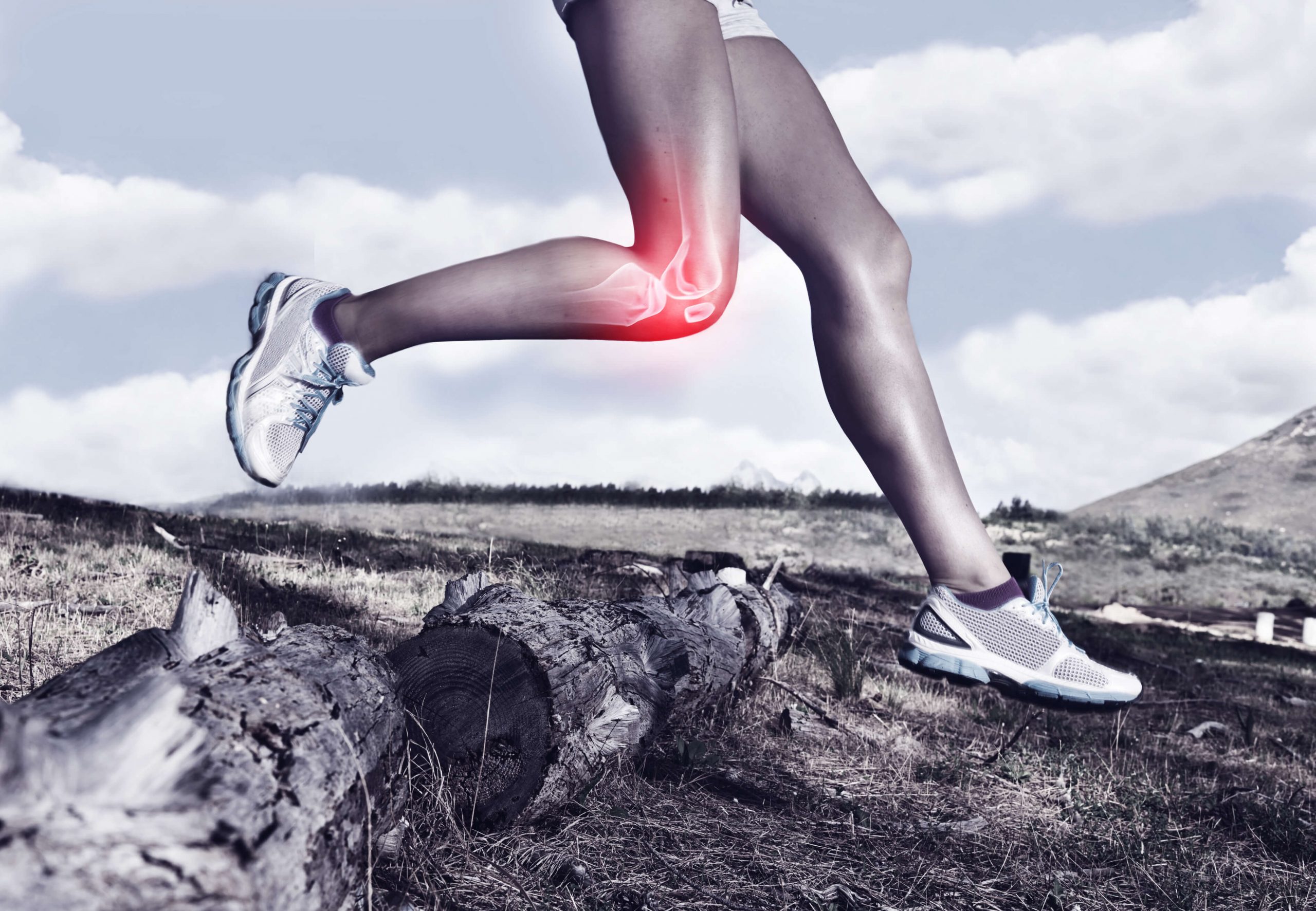
Here’s What You Need To Know Few injuries are as frustrating as knee injuries, especially when you’re left sidelined from your favourite sporting activities. Unfortunately, anyone can fall victim to knee injuries regardless of whether they are professional athletes or regular fitness enthusiasts. In fact, knee injuries can also arise from everyday activities or accidents. […]

Running subjects the knee joints to repeated movements that may cause substantial strain over time. Patellofemoral pain syndrome—commonly known as runner’s knee—affects numerous athletes and fitness enthusiasts. This comprehensive guide examines the condition in depth, providing detailed information on its causes, symptoms, diagnosis, treatment options, and preventative techniques to help runners stay active while minimising […]