Frozen Shoulder, medically referred to as Adhesive Capsulitis (AC), is a painful condition that affects 2-5% of the general population.
Women are particularly more at risk, along with diabetics and people in the 40 – 65 year age group.
It is generally not a life-threatening condition but it can cause significant disturbance to a patient’s lifestyle, both at home, work or play.
It is also important to ensure that the patient is not suffering from a more serious condition, that masquerades as a frozen shoulder.
What Is A Frozen Shoulder?
A common disorder characterised by stiffness and pain in the shoulder that limits the range of motion, frozen shoulder is a chronic inflammatory condition that develops gradually over time, making it difficult to detect.
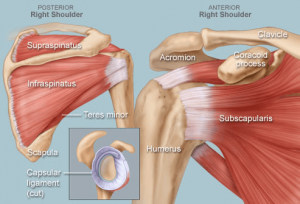
The shoulder’s ball and socket joint slowly loses mobility, until it becomes “frozen”. This is a result of inflammation and scarring of a surrounding shoulder capsule.
It is akin to a thin-walled bubble turning into a leathery basketball, hence “trapping” the shoulder.
This means compromising simple daily activities such as getting dressed or reaching a shelf above, as any movement may cause a great deal of pain.
The Medical Mystery Of Frozen Shoulder
There is a lingering mystery surrounding the condition when it happens to healthy people.
In most cases, a diagnosis of frozen shoulder is deemed “idiopathic”, meaning it happens for no particular reason. Nonetheless, it is sometimes associated with traumatic injuries such as dislocation or a rotator cuff tear.
In other cases, the so-called injury may just be a simple arm movement such as reaching awkwardly underneath a table to switch on a power point, or even putting on a car seat belt. This is sometimes enough to be the initial trigger of a frozen shoulder.
Frozen Shoulder & Diabetes
Frozen shoulder is not an uncommon condition amongst the diabetic community. Although statistics vary, it is estimated that as many as 10 – 20% of individuals with diabetes will suffer from a frozen shoulder in their lifetime. It has also been reported in medical literature that unfortunately, the frozen shoulders of diabetic patients tend to take longer to recover.
Timeline For Developing Frozen Shoulder
The primary symptoms of a frozen shoulder are usually so subtle that you may not notice them. Therefore, it is crucial to be aware of any persistent shoulder pain, according to Dr K L Ong, an orthopaedic surgeon and frozen shoulder specialist in Singapore.
Frozen shoulder progresses in 4 stages: inflammation, freezing, frozen, and thawing.
- Stage 1 (inflammation): The initial stage may last up to 3 months, associated with pain and reduced range of motion.
- Stage 2 (freezing): Pain slowly becomes worse while the range of motion gradually decreases over a period of 6 weeks to 9 months. Certain types of movements may be especially painful.
- Stage 3 (frozen): Over a span of 4 to 6 months, where the shoulder is “stuck”. The pain dwindles down to a dull ache, especially at night.
- Stage 4 (thawing): Slow but gradual recovery of shoulder movement over a 6 to 24 months period.
The duration of each phase above varies with the timing of treatment interventions. Early detection, together with appropriate treatment methods can help you avoid the undesirable consequences of a frozen shoulder.
Frozen Shoulder Treatment Methods
A frozen shoulder is one of the few health conditions that will actually go away on its own if you ignore it. However, the process can take up to 2 years and the pain can be unbearable, affecting your quality of life.
Therefore, the main focus of treatment is to minimise pain while restoring motion and strength in the shoulder.
Non-Surgical Treatment
Most patients have seen remarkable improvements with relatively simple non-surgical treatment methods for frozen shoulder.
Nonsteroidal Anti-Inflammatory Medicines
Drugs like aspirin and ibuprofen have the ability to reduce inflammation and alleviate mild pain. However, not all painkillers are suitable for every patient, so it is crucial to consult your doctor before consuming one
Corticosteroid Injections
This is a powerful anti-inflammatory medicine that will be injected directly into your shoulder joint. Nonetheless, repeated injections are discouraged as they may cause further damage to the shoulder.
Physical Therapy Exercises For Frozen Shoulder
Frequent, gentle exercises could help speed up the process of restoring motion in the shoulder. However, it is important to only do it under the supervision of a physiotherapist. Therapy includes a range of stretching exercises tailored to enhance motion in the shoulder.
It is crucial to warm up the muscles in your shoulder before performing these exercises. And remember to only stretch to the point of tension but not pain. Here are some exercise examples that might be recommended.
Pendulum Stretch
This is a gentle way to increase movement in the shoulder, using the force of gravity. Stand slightly wider than shoulder-width apart and lean forward. Let the affected arm hang down and swing it in small circular motions. Continue for 30 to 60 seconds. As your condition improves, you can try increasing the diameter of the circular swing or try holding a lightweight object in the swinging arm.
Towel Stretch
Grasp a rolled-up towel firmly with both hands behind your back. Use your good arm to slowly lift the affected arm upwards. You will feel a stretch in your shoulder. Do this 10 to 20 times a day.
Finger Walk
Stand three-quarters of an arm’s length away from the wall. Starting from waist level with your elbow slightly bent, slowly “walk” your fingers up the wall till your shoulder level, or as high as you can. Once the maximum height is reached, slowly lower the arm and repeat the process. Do this 10 to 20 times a day.
Cross-Body Reach
Stretch the affected arm out straight and bring it across your body. Hook your good arm under the affected arm and apply gentle pressure to stretch the shoulder. Hold this position for 20 seconds. Do this 10 to 20 times a day.
Remember that these exercises should only be performed after evaluation by a qualified medical professional. Should you experience any pain or discomfort while doing the above exercises, stop immediately.
Surgical Treatment
The surgeon’s knife is always the last option. However, if symptoms do not improve with therapy or other conservative methods, a well-performed surgery can be a function-restoring option. Remember to discuss with your doctor about the risks and benefits involved in surgery and the post-surgery recovery plan. Shoulder Arthroscopic Capsular Release and Manipulation is a common procedure performed for recalcitrant frozen shoulders.
Shoulder Arthroscopy (Key-Hole) Capsular Release and Manipulation
By the time the patient with a frozen shoulder has reached this stage of treatment, the shoulder is likely to have undergone and failed other less invasive treatment methods.
This is often due to the severity of inflammation and scarring that is within the affected shoulder joint.
It is this inflammation and scarring condition that a surgical option addresses.
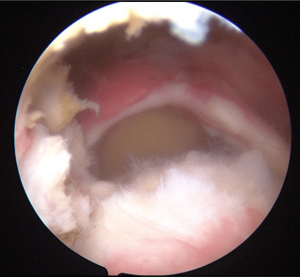
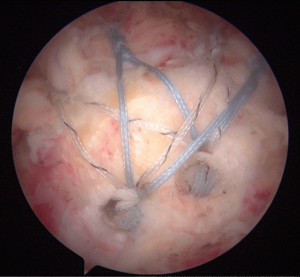
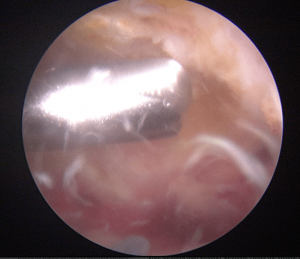
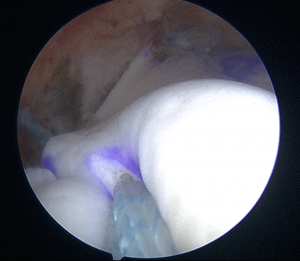
Under general anaesthesia, a minimally invasive keyhole surgery is performed with small incisions. A small arthroscope camera, in combination with arthroscopic instruments are used to safely and carefully release the scarred tissue trapping the shoulder and to reduce the inflammation.
Having safely released the scarred and inflamed tissue, gentle manipulation of the shoulder through its range of motion is performed.
After surgery, compliance to physical therapy is necessary in order to maintain the motion that was achieved with surgery. This duration will vary, but if done consistently and properly, your shoulder should be able to achieve a normal range of motion again.
In patients who have been suffering from this condition, such a keyhole surgery offers a much needed relief and more predictable return to function.
How Will I Know If I Have A Frozen Shoulder?
If you suspect that you have a frozen shoulder, see a shoulder specialist as soon as possible to get a diagnosis.
A physical examination conducted by a doctor is usually necessary for diagnosing a frozen shoulder. The simple test involves a doctor carefully moving your shoulder in various directions to determine if pain occurs with the motion and thus evaluating the severity of the condition.
This range of motion is known as the “passive range of motion”. When you move your shoulder on your own, you are exhibiting the “active range of motion”. It is normal for people to display a limited range of motion both passively and actively when they have a frozen shoulder.
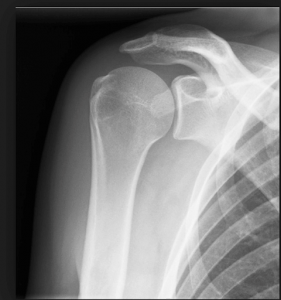
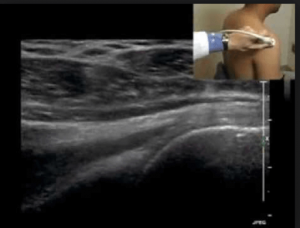
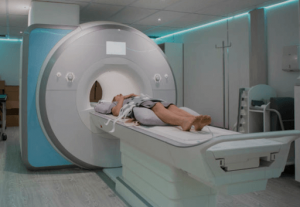
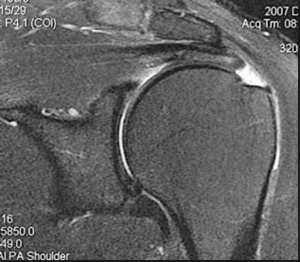
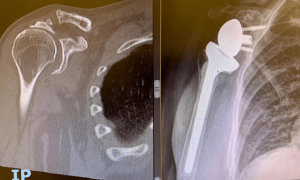
Other imaging tests such as X-ray or Magnetic Resonance Imaging (MRI) may be required to rule out other possible conditions that are causing stiffness and pain in your shoulder.
What Should I Do If I Have A Frozen Shoulder?
If you are in doubt over whether you have a frozen shoulder or not, contact an orthopaedic surgeon in Singapore who specializes in shoulder conditions to get a thorough assessment and to determine if you are truly suffering from frozen shoulder. Furthermore, consulting a doctor will ease any worries and concerns you may have regarding this condition.
Frequently Asked Questions About Frozen Shoulder
If you are in doubt over whether you have a frozen shoulder or not, contact an orthopaedic shoulder specialist to get a thorough assessment and to determine if you are truly suffering from frozen shoulder. Furthermore, consulting a doctor will ease any worries and concerns you may have regarding this condition.
Can I get a frozen shoulder twice?
Yes, but it rarely occurs in the same shoulder. Once you’ve had it on one side, you have a 50% chance of recurrence in the opposite shoulder.
After a frozen shoulder, is it possible to achieve a full range of motion again?
Most people who have recovered from a frozen shoulder report that they do get their full range of motion back.
How long is the recovery period for a frozen shoulder?
The timeline for recovery varies depending on the treatment approach. Full recovery for this condition may even take up to 3 years. Nonetheless, physical therapy remains the primary treatment method recommended to patients, focusing mainly on shoulder flexibility.
However, if the shoulder inflammation and scarring is severe, a well performed keyhole surgery may offer an option with a more predictable and shorter recovery time.
It is important for patients to understand that the recovery journey may be slow and tedious. Commitment to therapy remains crucial in ensuring complete recovery.
Conclusion
In a nutshell, a frozen shoulder is not as scary as it seems to be. It is a condition that will go away eventually with the right type of treatment. There are usually no hard and fast rules when it comes to treating your frozen shoulder.
Depending on the severity of your condition, a treatment method will be carefully selected by your orthopaedic surgeon.
Most patients gradually find complete relief of pain and experience a normal range of motion in the shoulder joint after going through physiotherapy. Surgery is an available option if medication and physiotherapy does not produce a satisfactory outcome. Don’t let your frozen shoulder hinder your daily activities, and seek medical advice early to avoid complications.