
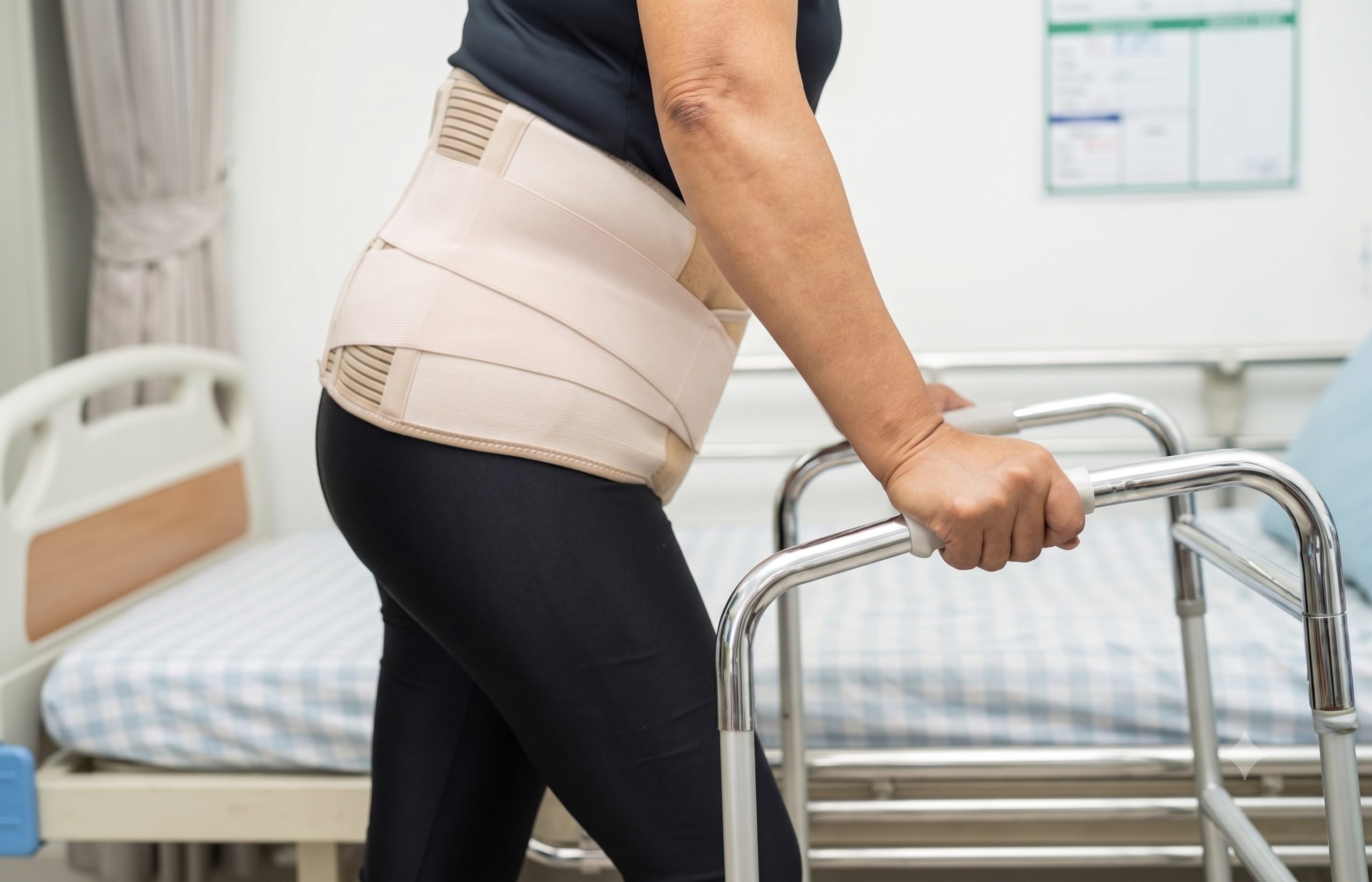
Hip replacement recovery spans six to twelve months in full, though many patients return to most daily activities well before that milestone. If you are considering or recovering from a hip replacement in Singapore, this guide walks you through the process from the first days post-surgery to full recovery and beyond.
What Hip Replacement Recovery Involves
Hip replacement recovery is the period during which your body heals after surgery, your implant integrates with surrounding bone, soft tissues repair, and you progressively regain strength, mobility, and function.
Recovery unfolds in overlapping phases, each with its own goals and milestones.
The First Few Days After Surgery
In the immediate days following surgery, the clinical team’s priority is managing pain, preventing complications such as blood clots, and getting you moving safely. Most patients begin standing and taking short assisted steps within 24 hours of surgery. You will likely use a walking frame or crutches, and a physiotherapist will guide your first movements.
Swelling, bruising, and fatigue are entirely normal at this stage.
Weeks Two to Six: Early Rehabilitation
Once you return home, structured physiotherapy begins in earnest. The focus during this phase is on restoring basic mobility, practising safe movement patterns, and preventing stiffness. You will follow hip precautions (movement restrictions that protect the new joint while tissues heal) and gradually increase the distance you walk each day.
Many patients transition from a walking frame to a single crutch or walking stick during this period.
Weeks Six to Twelve: Building Strength and Mobility
By six weeks, most patients have a follow-up review with their orthopaedic surgeon. If healing is progressing well, activity restrictions are often eased. Physiotherapy shifts toward strengthening the muscles around the hip, improving balance, and refining your walking pattern.
Climbing stairs with greater confidence and managing light household tasks independently are common milestones during this phase.
Three to Six Months: Returning to Daily Activities
Many patients return to work, resume social activities, and reintroduce low-impact exercise such as swimming or cycling. Residual stiffness and occasional discomfort may persist but typically continue to improve.
Six to Twelve Months: Full Recovery and Beyond
Full recovery, meaning the point at which the implant has integrated fully and surrounding muscles have regained their strength, generally occurs between six and twelve months. Some patients, particularly those who were very active before surgery, continue to notice gradual improvements beyond the twelve-month mark.
| Phase | Typical Duration | Key Milestones | Common Activities Permitted |
|---|---|---|---|
| Immediate post-operative | Days 1 to 3 | Standing, assisted walking | Short walks with frame |
| Early rehabilitation | Weeks 2 to 6 | Walking with aid, basic mobility | Light household tasks, short walks |
| Progressive strengthening | Weeks 6 to 12 | Reduced reliance on walking aid | Stair climbing, light daily activities |
| Return to daily life | Months 3 to 6 | Return to work (desk roles), low-impact exercise | Swimming, cycling, driving (if cleared) |
| Full recovery | Months 6 to 12+ | Full muscle strength, implant integration | Most activities, including light recreational sport |
Factors That Affect Your Hip Replacement Recovery Timeline
Several factors influence how quickly and smoothly you progress through each phase.
Age and Overall Health
Younger, healthier patients often recover more quickly, as their bodies tend to heal tissue and integrate implants more efficiently. However, age alone is not a barrier to a good outcome. Older adults who are otherwise well and medically optimised before surgery can achieve good results. Conditions such as diabetes, cardiovascular disease, or osteoporosis may require additional management to support healing.
Pre-Surgery Fitness and Prehabilitation
Prehabilitation refers to targeted exercise and conditioning undertaken in the weeks before surgery, with the goal of strengthening the muscles around the hip and improving cardiovascular fitness. Patients who engage in prehabilitation may find that their post-operative recovery progresses more smoothly. Entering surgery with stronger supporting muscles can give the new joint a better foundation to work from.
If surgery is not imminent, maintaining as much physical activity as your hip allows is one of the most beneficial steps you can take.
Type of Hip Replacement Performed
Total hip replacement (where both the ball and socket of the joint are replaced) and partial hip replacement (hemiarthroplasty, where only one component is replaced) have somewhat different recovery trajectories. The surgical approach used, whether the surgeon accesses the joint from the front (anterior), side (lateral), or back (posterior), also influences early recovery, particularly in terms of hip precautions and the risk of dislocation.
Your orthopaedic surgeon will discuss which approach is most appropriate for your anatomy and condition.
Commitment to Physiotherapy and Rehabilitation
Adherence to your physiotherapy programme is one of the most significant factors within your control. Patients who attend sessions consistently, complete home exercise programmes, and follow their physiotherapist’s guidance tend to achieve better functional outcomes and reach milestones sooner. Skipping sessions or pushing too hard too soon can both delay progress.
What Does Physiotherapy After Hip Replacement Look Like?
Physiotherapy after hip replacement follows a structured, progressive plan that begins in hospital and continues for several months after you return home.
Early Mobility Exercises
In the first weeks, physiotherapy focuses on gentle range-of-motion exercises, ankle pumps (to encourage circulation and reduce clot risk), and practising movements such as getting in and out of bed, sitting down, and climbing steps safely.
Your physiotherapist will also teach you the specific hip precautions relevant to your surgical approach, so you move confidently without placing undue stress on the healing joint.
Progressive Strengthening and Balance Work
As healing progresses, exercises become more challenging. Resistance work targeting the hip abductors (the muscles on the outer hip), quadriceps, and glutes helps stabilise the joint and restore your natural walking pattern. Balance and proprioception (your body’s sense of joint position) training is introduced to reduce the risk of falls and improve confidence on uneven ground.
Gait retraining, which involves practising how you walk to eliminate compensatory patterns that may have developed during years of hip pain, is an important component of this phase.
Prehabilitation Can Give You a Head Start
Starting targeted hip and leg strengthening exercises before surgery may help support your post-operative recovery. Even a few weeks of consistent prehabilitation can help you enter surgery with stronger muscles, better cardiovascular conditioning, and a clearer understanding of the exercises you will be doing afterwards. If your surgery date is confirmed, ask your physiotherapist about a prehabilitation programme.
Common Concerns During Hip Replacement Recovery
Managing Pain and Swelling
Some degree of pain and swelling is expected in the weeks following surgery. Your surgical team will prescribe a pain management plan that may include oral analgesics, anti-inflammatory medication, and ice therapy. Pain typically decreases progressively over the first six weeks, though you may notice it fluctuates with activity levels.
Swelling can persist for several months, particularly towards the end of the day or after increased activity. Elevating the leg when resting and applying ice packs (wrapped in a cloth to protect the skin) can help manage this.
Sleep and Comfort Adjustments
Many patients find sleep challenging in the early weeks. Discomfort, unfamiliar positioning requirements (such as sleeping with a pillow between the legs to maintain hip alignment), and post-operative fatigue can all disrupt rest. Using a firm mattress and arranging pillows strategically can help. Most patients find sleep quality improves noticeably by weeks four to six.
If pain is consistently preventing sleep, discuss this with your doctor, as adjustments to your pain management plan may be helpful.
Emotional Wellbeing and Patience with Progress
Reduced independence during recovery can be emotionally challenging, particularly for people who are accustomed to being active or self-sufficient. Feelings of frustration, low mood, or impatience with the pace of progress are common and valid. Recovery is rarely linear; some days will feel like a step backwards, and that is a normal part of the process.
Staying connected with family and friends, maintaining small daily routines, and celebrating incremental milestones can all support your emotional wellbeing during this period.
When Can You Return to Work and Activities After Hip Replacement?
Most patients can return to desk-based work within four to six weeks of surgery, provided they are comfortable sitting for extended periods and can manage the commute safely. For physically demanding roles involving prolonged standing, heavy lifting, or uneven terrain, a return to work timeline of three to six months is more realistic, and a phased return is often advisable.
Driving is typically permitted once you have sufficient strength and reaction time to operate the vehicle safely, and once you are no longer taking strong opioid pain medication. For most patients, this falls between six and twelve weeks after surgery, though your surgeon will advise based on your individual progress.
| Activity | Typical Timeframe | Considerations |
|---|---|---|
| Desk work | 4 to 6 weeks | Ensure comfortable seating and ability to take regular movement breaks. |
| Driving | 6 to 12 weeks | Surgeon clearance required; no strong opioid medication. |
| Light household tasks | 2 to 6 weeks | Avoid bending beyond hip precaution limits. |
| Swimming | 3 to 4 months | Once the wound is fully healed and the surgeon has cleared the activity. |
| Cycling (stationary) | 6 to 8 weeks | Low-impact option suitable for early rehabilitation. |
| Cycling (outdoor) | 3 to 6 months | Balance and terrain considerations apply. |
| Golf | 4 to 6 months | Rotational forces on the hip require adequate healing. |
| Hiking | 6 to 12 months | Uneven terrain demands full strength and stability. |
| Air travel (long-haul) | 6 to 12 weeks minimum | Blood clot risk; discuss timing and precautions with your surgeon. |
Clinical Insights
Patients who enter surgery with realistic expectations and a clear understanding of the recovery process tend to cope better with the challenges of rehabilitation. Recovery from hip replacement surgery in Singapore is not simply about the surgery itself; it is about the weeks and months of structured work that follow.
The type of implant, the surgical approach, the patient’s anatomy, and their pre-operative condition all inform what a realistic and achievable recovery looks like for each individual. Structured physiotherapy, consistent follow-up, and open communication between patient and surgeon are the cornerstones of a well-managed recovery.
Setting Yourself Up for a Smoother Recovery
Preparation before surgery can make a meaningful difference to how smoothly your recovery unfolds. Consider the following steps:
- Prepare your home environment: Remove trip hazards such as loose rugs, install grab rails in the bathroom, and arrange a sleeping area on the ground floor if your bedroom requires significant stair climbing.
- Arrange practical support: Plan for help with meals, transport, and household tasks for at least the first two to four weeks.
- Start prehabilitation: If time allows, begin gentle hip and leg strengthening exercises before surgery.
- Follow post-operative instructions carefully: Hip precautions, wound care, and medication schedules are all important components of early recovery.
- Stay consistent with physiotherapy: Attend all scheduled sessions and complete your home exercise programme as directed.
When to Seek Professional Help During Recovery
- Signs of infection: Fever above 38°C, increasing redness or warmth around the wound, unusual or foul-smelling discharge from the surgical site.
- Sudden increase in pain: A significant and unexplained worsening of pain, particularly if it follows a fall or unusual movement.
- Leg swelling with calf pain: This combination can indicate a deep vein thrombosis (a blood clot in the leg), which requires urgent assessment.
- Feeling of instability or a “clunking” sensation: A sense that the hip joint is unstable, or a clicking or clunking feeling that is new or worsening, should be evaluated.
- Shortness of breath or chest pain: These symptoms can indicate a pulmonary embolism (a blood clot in the lungs) and require emergency medical attention.
When in doubt, contact your surgeon’s team.
Commonly Asked Questions
How painful is recovery after hip replacement?
Pain is expected in the first few weeks and is typically managed with prescribed medication. Most patients find that pain decreases noticeably by weeks four to six. Discomfort during exercise is normal, but sharp or worsening pain at rest should be discussed with your surgeon. Many patients report that post-operative pain, while present, is more manageable than the chronic pain they experienced before surgery.
How long will I need to use a walking aid?
Most patients use a walking frame initially, then transition to a single crutch or walking stick by weeks two to four. Many are able to walk unaided by six to eight weeks, though this varies depending on individual progress and surgical approach. Your physiotherapist will advise when it is safe to reduce reliance on the aid.
Can hip replacement surgery fail, and what are the signs?
Hip replacement complications are uncommon but possible. Signs that may indicate a problem include persistent or worsening pain beyond the expected recovery period, instability or dislocation of the joint, swelling that does not resolve, or signs of infection. Implant loosening can occur over many years. Regular follow-up appointments with your orthopaedic surgeon allow for early detection of any issues.
Is hip replacement recovery different for older adults?
Recovery timelines may be somewhat longer for older adults, particularly those with other health conditions or reduced baseline fitness. However, age alone does not determine outcome. Older patients who are medically well-prepared and commit to rehabilitation can achieve good functional results. Your surgical and rehabilitation team will tailor the recovery plan to your specific needs and circumstances.
How long does a hip replacement implant last?
Modern hip replacement implants are designed to be durable. Many patients may find that an implant functions well for fifteen to twenty years or more, though this depends on factors such as activity level, body weight, and implant type. Your orthopaedic surgeon will discuss implant options and longevity expectations during your pre-operative consultation.
Speak with an Orthopaedic Specialist About Your Hip Replacement Recovery
Every patient’s hip replacement recovery in Singapore is unique, and the most reliable guidance comes from a specialist who can assess your specific condition, surgical history, and rehabilitation needs. If you are considering hip replacement or would like to understand more about hip replacement in Singapore, a consultation with a hip specialist in Singapore is a practical next step toward making an informed decision.