
Many patients managing bunion pain in Singapore find meaningful relief through conservative, non-surgical approaches. This guide covers the evidence-based options available, from footwear changes to physiotherapy.
What Is a Bunion and Why Does It Develop?
A bunion (medically known as hallux valgus) is a bony prominence that forms at the base of the big toe, where the toe joint gradually shifts outward. The big toe angles inward toward the second toe, creating a visible bump on the inner edge of the foot. This is a structural change in the bone, not simply a growth or swelling.
Bunions develop when the forces acting on your foot become unbalanced over time. Several factors may contribute:
- Foot structure and genetics: Flat feet, low arches, or a naturally mobile big toe joint can increase risk. Bunions often run in families.
- Footwear habits: Narrow, pointed, or high-heeled shoes compress the toes and push the big toe inward repeatedly over years.
- Activity patterns: High-impact activities or prolonged standing may accelerate the process in feet that are already predisposed.
- Singapore’s climate: Year-round heat encourages open, flat footwear, which can be helpful, but also increases the use of unsupportive sandals and flip-flops that offer little structural stability.
How Bunions Progress Over Time
In the early stages, a person may notice only a slight bump and occasional discomfort after long walks. Over months and years, the joint deviation (the degree to which the toe shifts out of alignment) can increase. The surrounding soft tissues may adapt to the new position, making the deformity more fixed. Discussing bunions with a healthcare professional at an earlier stage may be associated with more management options than waiting until the joint is severely misaligned.
Common Symptoms Beyond the Visible Bump
The bony bump is the most obvious sign, but bunions can produce a wider range of symptoms:
- Redness, swelling, or warmth around the big toe joint
- Persistent aching or soreness, especially after activity
- Restricted movement in the big toe
- Corns or calluses where the toes rub against each other
- Difficulty finding comfortable footwear
- In more advanced cases, the second toe may begin to overlap or buckle, a condition known as a hammertoe
Who Is a Good Candidate for Non-Surgical Bunion Treatment?
Conservative management may work well when the bunion is identified before significant joint damage has occurred. If your bunion is mild to moderate, you are experiencing manageable pain, and your daily function is not severely compromised, non-surgical treatment is a reasonable starting point worth discussing with a healthcare professional.
Bunion severity can influence which non-surgical strategies are most appropriate. The table below outlines the general characteristics of each stage and the typical management approach:
| Severity | Characteristics | Typical Management Approach |
|---|---|---|
| Mild | Small bump, slight toe deviation, minimal pain, full joint movement | Footwear modification, toe spacers, exercises |
| Moderate | Visible deformity, some joint stiffness, intermittent pain, possible calluses | All of the above plus custom orthotics, physiotherapy, pain management |
| Severe | Significant toe deviation, reduced joint movement, persistent pain, possible overlapping toes | Conservative measures for symptom control; orthopaedic review recommended to discuss all options |
Even patients with moderate-to-severe bunions may benefit from conservative care to reduce pain and slow progression. A professional assessment can help clarify where you sit on this spectrum and which combination of strategies may suit your situation.
Footwear Modifications: A Practical Starting Point
The shoes you wear every day can have a direct impact on how much stress your bunion experiences. For many patients, choosing appropriate footwear is a meaningful change worth making.
What to Look for in Bunion-Friendly Shoes
- Wide toe box: Look for shoes that allow your toes to spread naturally without compression. The widest part of the shoe should align with the widest part of your foot.
- Low heel: Heels above two centimetres shift your body weight forward onto the forefoot, increasing pressure on the big toe joint. A low, stable heel distributes load more evenly.
- Firm midsole: A supportive midsole (the layer between the insole and the outer sole) helps control excessive foot motion.
- Breathable materials: In Singapore’s humidity, leather, mesh, or technical fabrics reduce moisture build-up, which can worsen skin irritation around the bunion.
- Adjustable fastenings: Lace-up shoes or those with Velcro straps allow you to customise the fit across the forefoot, reducing pressure on the bump.
Trying shoes on in the afternoon, when your feet are slightly swollen from daily activity, may give you a more accurate fit.
Footwear Habits That May Worsen Bunions
- Pointed toe shoes that force the big toe inward
- High heels worn regularly, even for short periods
- Flat, unsupportive sandals or flip-flops worn for extended walking
- Shoes that are too short, causing the toes to compress against the front
- Tolerating pain when wearing new shoes, which may indicate a poor fit
Orthotics, Toe Spacers, and Bunion Splints
A range of devices can help offload the bunion, support foot alignment, and reduce daily discomfort. These devices aim to manage symptoms and may help slow the progression of deformity, but they do not reverse bony changes that have already occurred.
Custom Orthotics vs. Off-the-Shelf Insoles
Custom orthotics are insoles made specifically for your foot shape following a biomechanical assessment. They redistribute pressure away from the bunion, address overpronation (inward rolling of the foot), and support the arch. They may be particularly useful if your bunion is linked to flat feet or an unstable gait pattern.
Off-the-shelf insoles are more affordable and accessible, and they can provide useful cushioning and mild arch support. They are a reasonable starting point if your symptoms are mild. However, they are not tailored to your individual foot mechanics, so their benefit may be limited for more complex presentations.
A biomechanical assessment by an orthopaedic surgeon or physiotherapist can help determine which option may be appropriate for your foot type and activity level.
Do Bunion Correctors Actually Work?
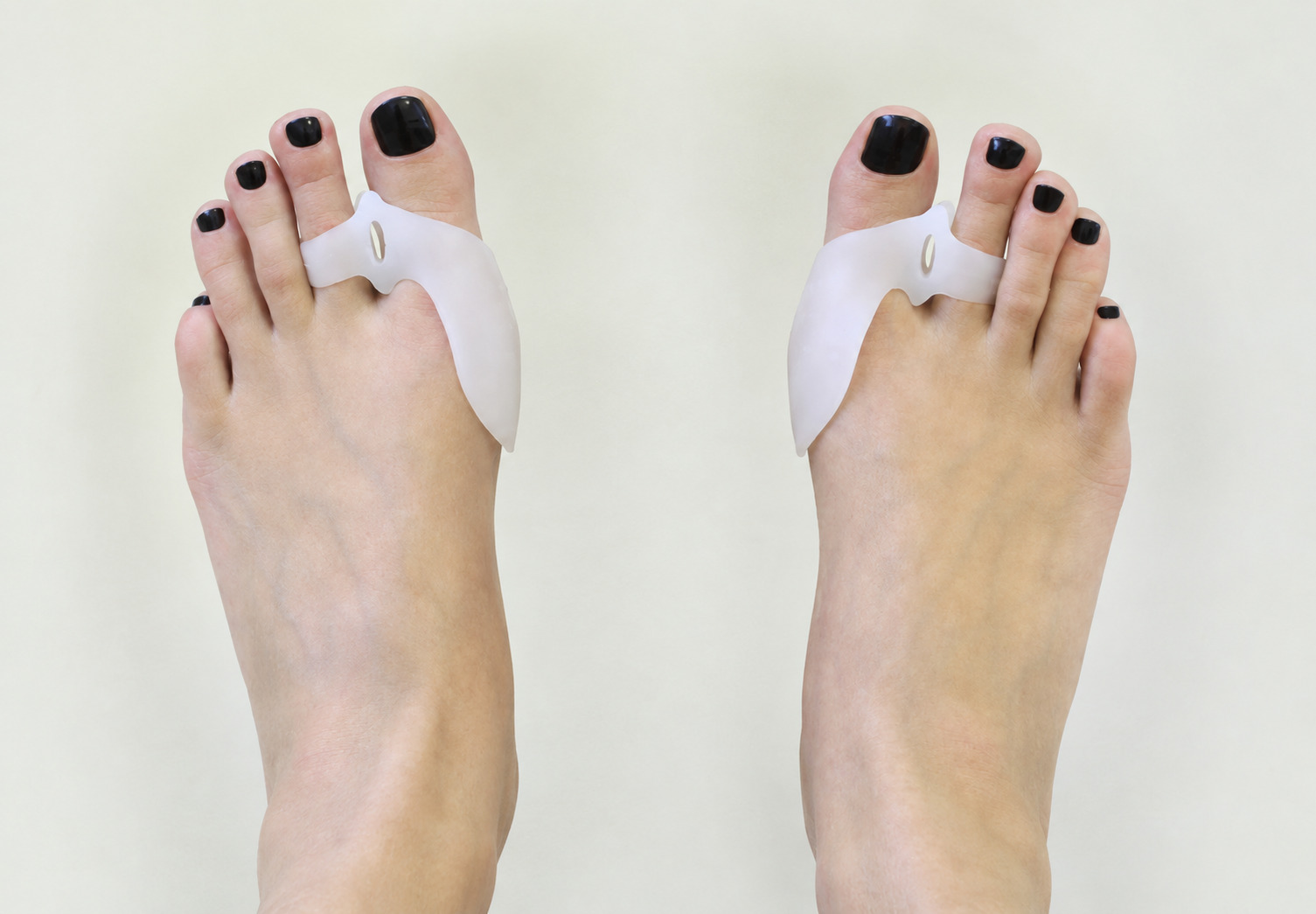
Silicone toe spacers fit between the first and second toes to gently separate them and reduce friction. They can relieve discomfort during activity and are inexpensive and easy to use.
Night splints hold the big toe in a straighter position while you sleep. They may help reduce pain and improve toe alignment slightly over time, but they do not permanently correct the underlying joint deviation. If you find them comfortable and they reduce morning stiffness, they may be worth using. Consistent use over months is needed to assess any benefit, and results vary between individuals.
Exercises and Physiotherapy for Bunion Management
Strengthening the small muscles of the foot and maintaining joint flexibility may improve toe alignment, reduce stiffness, and support overall foot function. Staying active is generally safe for most patients with bunions and is encouraged where appropriate.
Toe and Foot Strengthening Exercises
The intrinsic muscles of the foot (the small muscles that control toe movement and arch stability) are often weak in people with bunions. Strengthening these muscles may help support the joint and reduce the forces that contribute to the deformity over time.
The following exercises may be worth trying daily, though a physiotherapist can confirm whether they are suitable for your situation:
- Toe spreading: Sit with your foot flat on the floor. Spread all five toes as wide as possible, hold for five seconds, then relax. Repeat ten times.
- Towel scrunches: Place a small towel flat on the floor. Use your toes to scrunch it toward you, then push it away. Repeat ten times.
- Short foot exercise: Sitting or standing, try to shorten the length of your foot by drawing the ball of the foot toward the heel without curling your toes. This activates the arch muscles. Hold for five seconds, repeat ten times.
- Big toe press: Place your foot flat on the floor. Press the tip of the big toe firmly downward without letting the toe curl or the ankle roll inward. Hold for five seconds, repeat ten times.
If you are unsure about your technique, a physiotherapist can guide you through these exercises and tailor a programme to your foot type.
Stretches to Maintain Joint Flexibility
- Big toe extension stretch: Sit down and gently pull the big toe upward toward the shin. Hold for twenty seconds, repeat three times on each foot.
- Calf stretch: Tight calf muscles can increase forefoot loading. Stretching the calf by standing facing a wall, stepping one foot back, and pressing the heel flat may help. Hold for thirty seconds.
- Plantar fascia stretch: Before getting out of bed in the morning, pulling your toes gently upward to stretch the sole of the foot may be helpful, particularly if you experience morning stiffness.
Pain Relief Options: Managing Bunion Discomfort Day to Day
Managing flare-ups proactively can help you stay active and comfortable. Practical steps include:
- Ice therapy: Applying an ice pack wrapped in a cloth to the bunion for fifteen to twenty minutes after activity may reduce swelling and ease soreness. Do not apply ice directly to the skin. This is particularly useful for active individuals immediately following exercise.
- Protective padding: Bunion pads or gel cushions placed over the bump can reduce friction from footwear. These are available at most pharmacies in Singapore and can be especially helpful during sports or long walks.
- Activity modification: Temporarily reducing high-impact activities such as running or prolonged standing can allow inflammation to settle. Switching to lower-impact exercises like swimming or cycling may help maintain fitness without aggravating the joint.
- Post-activity footwear and elevation: Switching to supportive, wide-toed recovery shoes immediately after sport reduces pressure on the joint. Elevating the foot after prolonged standing can also help reduce swelling.
- Anti-inflammatory medication: Over-the-counter anti-inflammatory medications such as ibuprofen may help manage acute flare-ups. They address symptoms rather than the underlying cause, and long-term use carries risks. You may wish to discuss appropriate use with your doctor.
How Effective Is Non-Surgical Bunion Treatment?
Non-surgical treatment will not reverse the bony deformity. What conservative care may achieve is meaningful: it can help reduce pain, slow the rate of progression, improve foot function, and support continued activity. Many patients manage their bunions with a consistent combination of footwear changes, exercises, and appropriate devices, though outcomes vary between individuals.
Non-surgical management is typically more successful as an ongoing, active process rather than a short-term fix. Patients who engage regularly with their exercise programme, maintain appropriate footwear habits, and attend follow-up assessments may achieve more sustained benefit.
If conservative measures are applied consistently and symptoms continue to worsen, or if the joint begins to show signs of arthritis (joint degeneration), a surgical review becomes a relevant conversation to have with a specialist.
Taking Charge of Your Bunion Management
Starting with footwear and exercise is a practical approach: replacing poorly fitting shoes with wide, supportive footwear and committing to a daily foot strengthening routine are reasonable first steps. Adding toe spacers or orthotics may be appropriate if a professional assessment identifies them as suitable for your foot type. Managing flare-ups promptly with ice and activity modification, rather than continuing to load the joint through pain, is generally advisable.
Many patients notice improvement in comfort over several weeks to months of consistent effort, though the degree and pace of improvement varies. Tracking your symptoms, noting what helps and what aggravates your pain, and bringing that information to your next clinical review can support a more informed discussion with your healthcare professional.
When to Seek Professional Help
- Pain that persists despite several months of consistent conservative management
- Difficulty walking, exercising, or performing daily tasks due to bunion discomfort
- Visible worsening of the deformity over a short period
- Pain that disrupts your sleep
- Development of secondary problems such as hammertoes, corns between toes, or pain spreading to the ball of the foot
- Significant stiffness or reduced movement in the big toe joint
Seeking assessment at an earlier stage generally preserves more management options. A specialist review can help clarify what is available and whether surgery is a relevant consideration for your situation.
Commonly Asked Questions
Can bunions go away on their own without surgery?
No. A bunion is a structural bony deformity, and once the joint has shifted out of alignment, it will not self-correct. However, symptoms can improve with conservative treatment in many cases. Many patients achieve good long-term pain control and maintain active lifestyles without requiring surgery. The goal of non-surgical treatment is effective symptom management, not reversal of the deformity.
Is it safe to exercise with a bunion?
For most patients, exercise is generally safe and encouraged, with appropriate modifications. Low-impact activities such as swimming, cycling, and walking in supportive footwear are generally well-tolerated. High-impact activities like running may need to be temporarily reduced during flare-ups. A physiotherapist or orthopaedic specialist can advise on activity modifications appropriate to your level of deformity and symptoms.
How long should I try non-surgical treatment before considering surgery?
There is no fixed timeline, as it depends on your bunion severity and how your symptoms respond. A reasonable approach is to commit to a structured conservative programme for three to six months before reassessing. If you have applied footwear changes, exercises, and appropriate devices consistently and your symptoms remain significantly limiting, that may be a reasonable point to discuss surgical options with a specialist.
Are bunion correctors worth buying in Singapore?
Bunion correctors and night splints are widely available in Singapore and may be worth trying if your symptoms are mild to moderate. They will not correct the underlying deformity, but some patients find they reduce morning stiffness and discomfort. Silicone toe spacers are available for daytime use and firm night splints for overnight wear. Consistent use over several months is needed to assess their benefit, and results vary between individuals.
What type of doctor should I see for bunion treatment in Singapore?
An orthopaedic surgeon with experience in foot and joint conditions is well-placed to assess your bunion and recommend appropriate management. A physiotherapist can provide hands-on rehabilitation and exercise guidance. For complex or progressive bunions, a specialist with a background in joint preservation can help you weigh conservative and surgical options in the context of your activity goals.
Next Steps
Two practical changes to consider: reviewing your footwear and beginning a daily toe-strengthening routine. Tracking your symptoms as you go, noting which activities aggravate your pain, how your footwear choices affect your comfort, and whether your deformity appears to be changing, can provide useful information for a future clinical review. If pain persists despite consistent effort, or if your symptoms begin to affect your sleep or daily function, speaking with a healthcare professional is advisable.
Speak with an Orthopaedic Specialist About Your Bunion
If your bunion is affecting your daily life or exercise routine, a consultation with a foot specialist may help clarify your situation. An assessment can identify the stage of your bunion, the factors contributing to your symptoms, and the combination of non-surgical strategies that may be appropriate for your circumstances.