
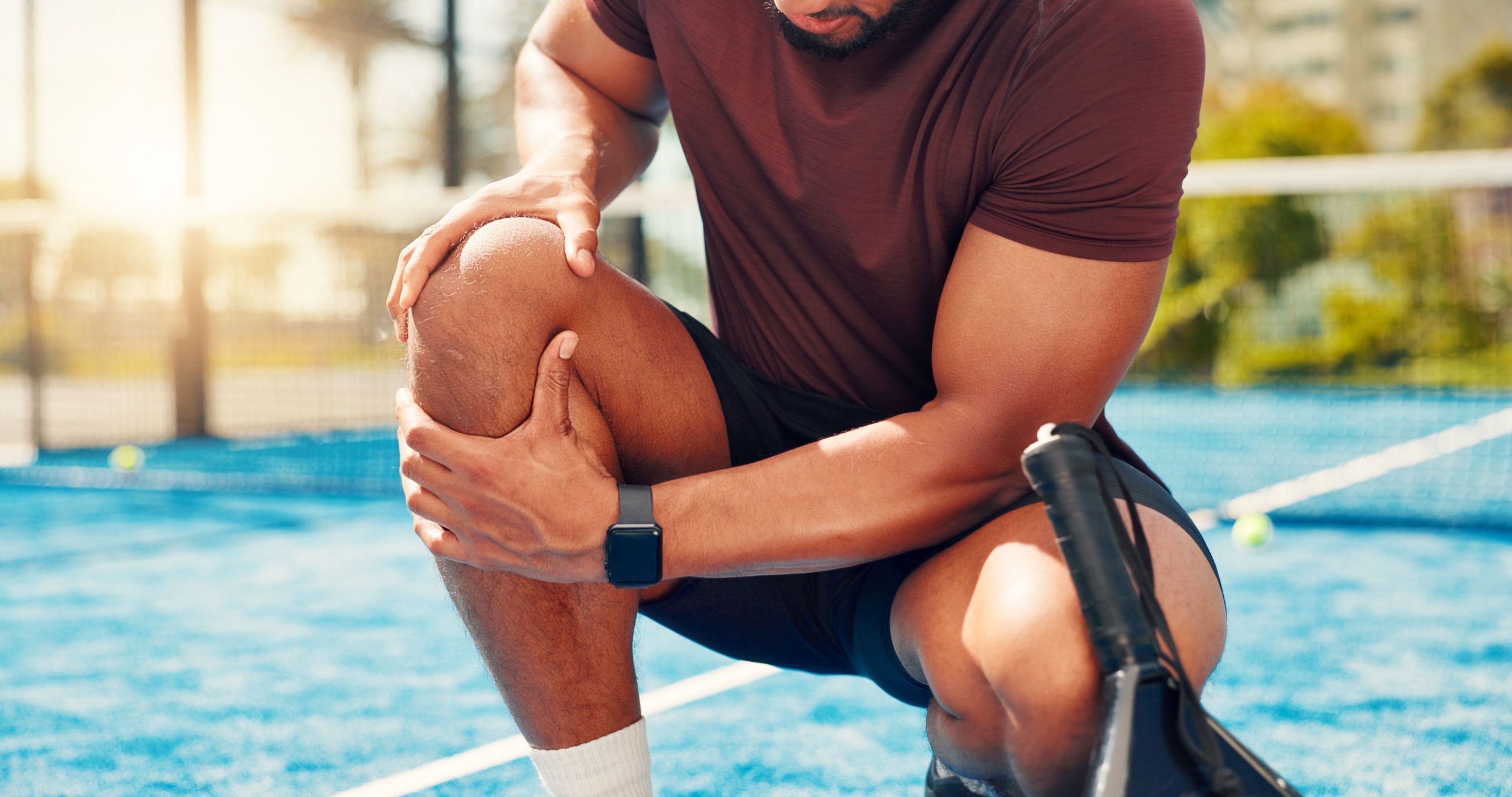
ACL vs Meniscus Tear: How to Tell the Difference
If you have recently injured your knee, you may have heard the terms “ACL tear” and “meniscus tear” used almost interchangeably. They are not the same injury, though they can occur together, and the distinction matters when it comes to treatment.
Both injuries can cause pain, swelling, and difficulty walking. Both can happen during sport or everyday activity. Yet they involve different structures, produce different symptoms, and often require different treatment approaches.
What Is the ACL and What Does It Do?
The anterior cruciate ligament (ACL) is one of the four main ligaments inside the knee joint. It runs diagonally through the centre of the knee, connecting the thigh bone (femur) to the shin bone (tibia). Its primary role is to control forward movement of the tibia and to stabilise the knee during rotational movements.
When the ACL is intact, it keeps the joint controlled and predictable during movement. When it tears, the knee can feel loose, unreliable, or as though it might give way.
ACL injuries are particularly common among active individuals who play sports that involve rapid changes of direction, jumping, or sudden stops. Sports such as football, basketball, badminton, and touch rugby are frequently associated with ACL tears. The injury often occurs without any direct contact.
What Is the Meniscus and What Does It Do?
The meniscus refers to two C-shaped pieces of cartilage that sit between the thigh bone and shin bone inside the knee joint. Each knee has two: the medial meniscus on the inner side and the lateral meniscus on the outer side. Together, they act as shock absorbers, distributing load evenly across the joint and protecting the surfaces of the bones.
Beyond cushioning, the menisci also contribute to joint stability and help lubricate the knee. A tear in either meniscus disrupts this function, which can lead to pain, swelling, and mechanical symptoms such as clicking or locking.
How Do ACL and Meniscus Injuries Happen?
ACL Tear: Common Causes
ACL tears most commonly result from sudden, high-energy movements rather than direct blows to the knee. Typical causes include:
- Pivoting or cutting sharply while the foot remains planted on the ground
- Landing awkwardly from a jump, particularly with the knee in a straightened or inward-collapsing position
- Sudden deceleration, such as stopping abruptly while running
- A direct collision that forces the knee into an unnatural position
Many patients describe hearing or feeling a distinct “pop” at the moment of injury, followed by immediate swelling and a sense that the knee is unstable.
Meniscus Tear: Common Causes
Meniscus tears can occur in two broad ways: as an acute injury during activity, or as a gradual degenerative process over time.
Acute meniscus tears often result from:
- Twisting the knee while the foot is fixed to the ground
- Deep squatting or kneeling under load
- A direct impact to the knee during contact sports
Degenerative meniscus tears develop gradually as the cartilage weakens with age and repeated stress. These tears can occur with relatively minor movements, such as rising from a low chair or stepping off a kerb.
Can You Injure Both at the Same Time?
Yes, and this is more common than many patients realise. ACL tears frequently occur alongside meniscus tears because the forces that rupture the ligament also stress the cartilage. When both structures are injured simultaneously, symptoms can overlap significantly, which is one reason why accurate diagnosis by a specialist is important.
| Feature | ACL Tear | Meniscus Tear |
|---|---|---|
| Typical movement | Pivoting, landing, sudden deceleration | Twisting, deep squatting, gradual wear |
| Sports commonly associated | Football, basketball, badminton | Football, running, racquet sports |
| Acute or degenerative | Typically acute | Both acute and degenerative |
| Contact required | Often non-contact | Can be non-contact or contact |
ACL vs Meniscus Tear Symptoms: What Does Each Feel Like?
Symptoms can vary between individuals, and overlap between the two injuries makes self-diagnosis unreliable. Each injury does tend to produce a recognisable pattern of symptoms, however.
Symptoms of an ACL Tear
The hallmark features of an ACL tear include:
- A loud or felt “pop” at the moment of injury
- Rapid swelling that develops within a few hours of the injury
- A feeling of instability or that the knee is “giving way,” particularly during weight-bearing or rotational movements
- Difficulty continuing the activity that caused the injury
- Pain, though the severity varies; some patients report surprisingly little pain initially despite significant ligament damage
- Patients frequently describe the sensation that their knee cannot be trusted to hold them during movement.
Symptoms of a Meniscus Tear
Meniscus tear symptoms tend to be slightly different in character:
- Pain located along the joint line (the inner or outer edge of the knee, depending on which meniscus is affected)
- Swelling that may develop more gradually than with an ACL tear
- A locking sensation, where the knee becomes temporarily stuck and cannot be fully straightened
- Clicking, catching, or a sensation of something moving inside the knee
- Stiffness, particularly after sitting for prolonged periods
- Pain that worsens with twisting, squatting, or climbing stairs
Overlapping Symptoms That Can Cause Confusion
| Symptom | ACL Tear | Meniscus Tear | Both |
|---|---|---|---|
| Swelling | ✓ | ✓ | ✓ |
| Knee instability | Primary feature | Possible | ✓ |
| Locking or catching | Rare | Primary feature | Occasionally |
| Popping sound at injury | Common | Less common | Possible |
| Joint-line tenderness | Less specific | Common | ✓ |
| Difficulty bearing weight | ✓ | ✓ | ✓ |
| Pain with twisting | ✓ | ✓ | ✓ |
How Are ACL and Meniscus Tears Diagnosed?
Physical Examination
Your specialist will begin with a thorough physical examination. For suspected ACL tears, the Lachman test is commonly used. The specialist applies gentle forward pressure to the shin bone while stabilising the thigh, assessing for excessive forward movement that would indicate ligament laxity.
For suspected meniscus tears, the McMurray test is frequently performed. This involves rotating the lower leg while the knee is bent, listening and feeling for a click or pain response along the joint line.
Other assessments may include observing your gait, checking range of motion, and evaluating for swelling or tenderness at specific points around the knee.
MRI and Imaging
An MRI (magnetic resonance imaging) scan is generally recommended to confirm the diagnosis and assess the extent of the injury. MRI produces detailed images of the soft tissues inside the knee, allowing the specialist to visualise the ligaments, cartilage, and other structures clearly.
X-rays are also commonly taken to rule out bony injuries. Together, clinical examination and imaging give a comprehensive picture of what has happened inside the knee.
How Does ACL vs Meniscus Tear Surgery Differ?
Not every ACL or meniscus tear requires surgery. Treatment depends on the nature and severity of the injury, your age, activity level, and personal goals.
ACL Reconstruction Surgery
The ACL typically has limited capacity to heal on its own following a complete tear due to the environment and blood supply inside the joint. When surgical treatment is appropriate, the torn ligament is replaced with a graft, typically taken from a tendon in your own body (such as the hamstring or patellar tendon) or from a donor source. This procedure is known as ACL reconstruction surgery.
The surgery is performed arthroscopically, meaning through small incisions using a camera and specialised instruments. This minimally invasive approach reduces tissue disruption and supports a more comfortable recovery.
Meniscus Surgery: Repair vs Partial Removal
Meniscus surgery falls into two main categories, and the choice between them depends largely on where the tear is located and what type of tear it is.
- Meniscus repair: The torn edges of the meniscus are stitched back together. This approach is preferred when the tear is in the outer zone of the meniscus, where blood supply is adequate to support healing. Repair preserves as much of the natural cushion as possible.
- Partial meniscectomy: The damaged portion of the meniscus is trimmed away, leaving the healthy tissue intact. This is more commonly performed for tears in the inner zone of the meniscus, where blood supply is limited and healing is unlikely.
Non-Surgical Management: When Is It an Option?
Non-surgical management may be appropriate in certain circumstances:
- ACL tears: Patients who are less active, older, or willing to modify their activity level may manage well without reconstruction, particularly with targeted physiotherapy and bracing. However, continued instability can increase the risk of secondary damage to the meniscus and cartilage over time.
- Meniscus tears: Small, stable tears, particularly degenerative tears in older patients, may respond well to physiotherapy, activity modification, and anti-inflammatory treatment.
| Feature | ACL Tear | Meniscus Tear |
|---|---|---|
| Typical surgical approach | Ligament reconstruction with graft | Repair or partial removal (arthroscopic) |
| Non-surgical option | Possible in selected patients | Often viable for small or degenerative tears |
| General recovery timeline | 6 to 9 months to return to sport | 6 weeks to 4 months depending on procedure |
| Influencing factors | Activity level, instability, secondary damage | Tear location, blood supply, patient age |
Why Tear Location Matters for Meniscus Treatment
The meniscus has an outer zone with a good blood supply (often called the “red zone”) and an inner zone with limited blood supply (the “white zone”). Tears in the red zone are more likely to heal after repair. Tears in the white zone are less likely to heal and may require partial removal instead. Your specialist will assess the tear location to determine which approach is most appropriate for your injury.
What Does Recovery Look Like for Each Injury?
Recovery After ACL Reconstruction
ACL reconstruction requires a longer and more structured rehabilitation process. Key milestones typically include:
- First few weeks: Managing swelling, restoring range of motion, and beginning gentle strengthening exercises
- Weeks 6 to 12: Progressive strengthening of the quadriceps, hamstrings, and hip muscles; improving balance and proprioception (the body’s sense of joint position)
- Months 3 to 6: Sport-specific training, agility drills, and gradual return to higher-impact activities
- 6 to 9 months: Return to competitive sport, subject to passing functional assessment criteria
Physiotherapy plays an important role throughout this process. Rushing the return to sport before the graft has matured and strength has been fully restored increases the risk of re-injury.
Recovery After Meniscus Surgery
Recovery after meniscus surgery varies depending on whether a repair or partial removal was performed.
- Partial meniscectomy: Recovery is generally faster, with many patients returning to daily activities within a few weeks and to sport within 6 to 8 weeks, depending on the extent of tissue removed.
- Meniscus repair: Because the repair needs time to heal, recovery is longer, often comparable to ACL reconstruction in terms of the return-to-sport timeline. Weight-bearing may be restricted in the early weeks to protect the repair.
In both cases, physiotherapy plays a central role in restoring strength, flexibility, and movement confidence.
When to Seek Professional Help
- A feeling that your knee is unstable or giving way during normal activity
- Locking or catching sensations that prevent full straightening of the knee
- Significant swelling that does not begin to settle within 48 to 72 hours
- Inability to bear weight on the affected leg
- Persistent pain that does not improve with rest
In some cases, delayed assessment can allow secondary damage to develop, particularly if instability goes unaddressed.
Commonly Asked Questions
How do I know if I have torn my ACL or meniscus without an MRI?
Without imaging, it is not possible to diagnose either injury with certainty. However, certain symptom patterns can suggest which structure may be involved. A loud pop at the time of injury followed by rapid swelling and a strong feeling of instability points more towards an ACL tear. Pain along the joint line, locking, or a catching sensation tends to be more associated with a meniscus tear. Symptoms overlap considerably, and many patients have both injuries simultaneously. A physical examination by a specialist, followed by an MRI if indicated, represents the standard clinical approach to confirm the diagnosis reliably.
Can a torn meniscus heal on its own without surgery?
Some meniscus tears can improve without surgery, particularly small, stable tears in the outer zone of the meniscus where blood supply is better. Degenerative tears in older, less active patients also often respond well to physiotherapy and activity modification. However, larger tears, tears that cause locking or persistent mechanical symptoms, and tears in areas with poor blood supply are less likely to resolve without intervention. Your specialist will assess the specific characteristics of your tear to advise on whether a non-surgical approach is appropriate.
Is ACL reconstruction always necessary for a torn ACL?
Not always. Whether ACL reconstruction is recommended depends on several factors, including the degree of instability, your activity level, your age, and whether other structures in the knee have also been injured. Some patients, particularly those who are less physically active or willing to modify their activities, manage well with physiotherapy and without surgical reconstruction. However, if instability persists or if you wish to return to sport involving pivoting and cutting movements, reconstruction is generally a more reliable long-term option.
How long after ACL or meniscus surgery can I return to sports?
After ACL reconstruction, many patients return to competitive sport between six and nine months post-surgery, provided they meet functional performance criteria. Returning too early before the graft has matured and strength has been fully restored increases the risk of re-injury. After a partial meniscectomy, return to sport may be possible within six to eight weeks. After a meniscus repair, the timeline is longer, often closer to four to six months, as the repaired tissue needs adequate time to heal. Your physiotherapist and specialist will guide you through a staged return-to-sport programme.
Are ACL and meniscus injuries more common in certain sports?
Both injuries are commonly seen in sports that involve rapid changes of direction, jumping, pivoting, and physical contact. Football, basketball, badminton, and rugby are frequently associated with ACL tears, largely because of the sudden deceleration and rotational forces involved. Meniscus tears are also common in these sports, as well as in activities that involve deep squatting or repetitive loading of the knee, such as weightlifting and running. Degenerative meniscus tears, however, can occur in individuals who are not particularly active, simply as a result of age-related changes in the cartilage.
Speak with a Knee Specialist in Singapore
If you are experiencing knee pain, instability, or mechanical symptoms after an injury, a consultation with an knee doctor in Singapore can provide the clarity you need. You may wish to explore your options for ACL and knee injury assessment in Singapore to better understand the treatment pathways available to you.