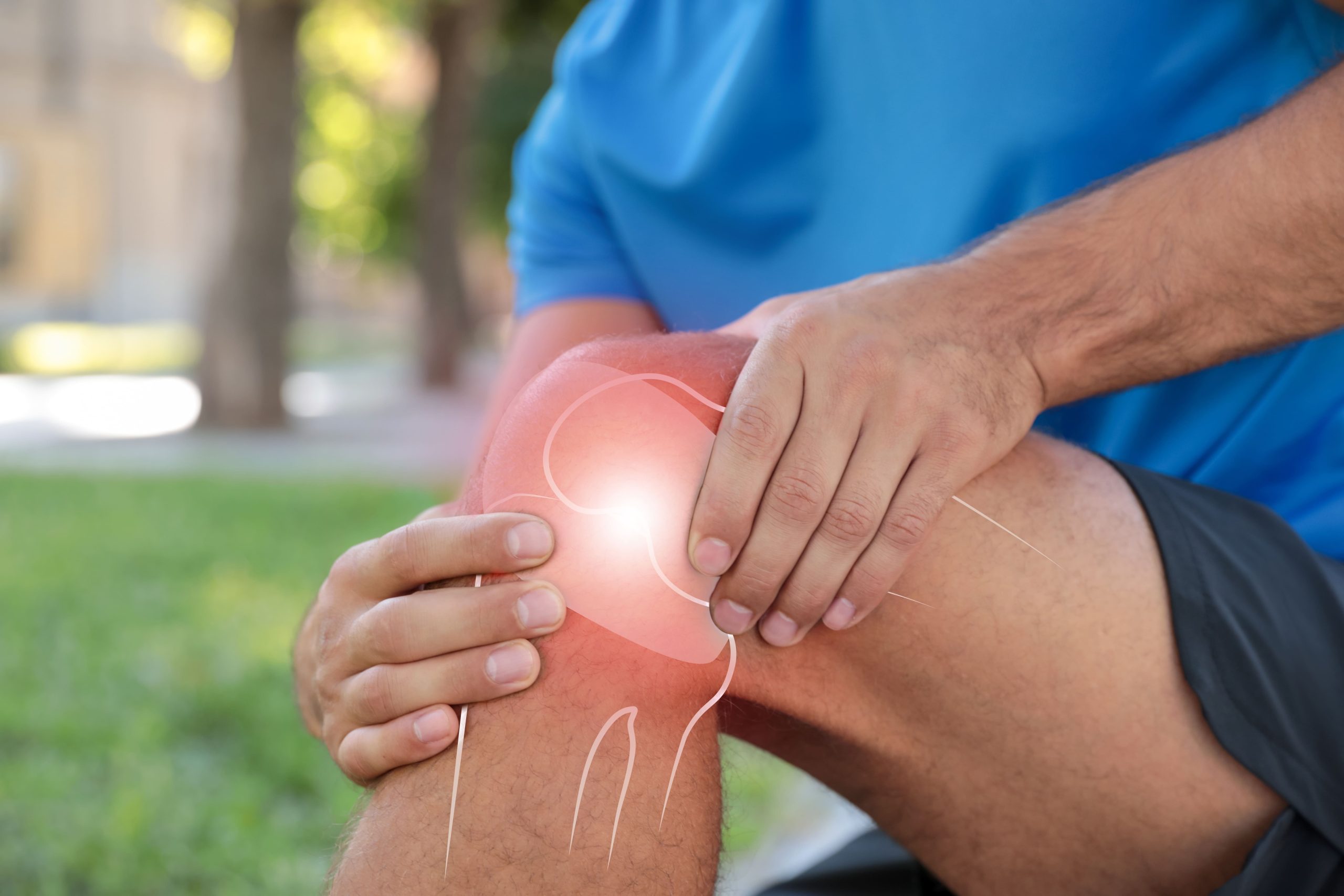
An ache at the front of your knee can make climbing a flight of stairs uncomfortable. Knee pain at the front of the joint is commonly reported by people who run, cycle, or play sports. It can also make everyday tasks, like climbing the stairs to your HDB flat or rising from a low chair, feel uncomfortable.
What Is Chondromalacia Patella?
Chondromalacia patella is the softening and breakdown of the smooth cartilage on the underside of your kneecap (patella). As the surface loses its smoothness, it can cause pain at the front of your knee. You may notice it more distinctly when climbing stairs, squatting, or running.
Think of healthy cartilage as a smooth, firm cushion. With chondromalacia patella, that cushion can become rough and frayed, like a worn carpet edge.
You may have heard the term “runner’s knee” (patellofemoral pain syndrome). The two are related but not identical. Runner’s knee often describes pain around the kneecap, and the cartilage may look normal. Chondromalacia patella specifically involves structural changes to the cartilage itself.
How Kneecap Cartilage Works
Your kneecap sits in a groove (the trochlea) at the lower end of your thigh bone (femur). When you bend and straighten your leg, the kneecap glides up and down along this groove, much like a train travelling along a track.
A protective layer of articular cartilage covers the surfaces of both bones, reducing friction and distributing load across the joint. Compressive forces through this joint increase significantly when you climb stairs, perform deep squats, or run downhill. If the kneecap tracks slightly off-centre, or if the surrounding thigh and hip muscles cannot control its path smoothly, the cartilage experiences uneven pressure. Over time, this repetitive friction can lead to cartilage wear.
Grades of Patellofemoral Cartilage Damage
Doctors typically classify chondromalacia patella into four grades based on the depth and extent of cartilage damage:
| Grade | Cartilage Condition | Typical Symptoms | General Treatment Direction |
|---|---|---|---|
| Grade I | Cartilage is softened or swollen, but the surface remains intact | Dull ache after activity; mild discomfort on stairs | Activity modification and targeted muscle strengthening |
| Grade II | Superficial cracks or minor fraying appear on the surface | Pain with stairs, squatting, or prolonged sitting; occasional clicking | Structured physiotherapy, taping, or supportive bracing |
| Grade III | Deeper fissures or fragmentation involving a broader area | More frequent pain, swelling, and a grinding sensation (crepitus) | Progressive rehabilitation; keyhole evaluation if symptoms persist |
| Grade IV | Cartilage has worn away, exposing the underlying subchondral bone | Persistent pain during daily tasks; recurrent swelling; joint stiffness | Specialist assessment; joint preservation or cartilage restoration |
The anatomical grade does not always correlate directly with the severity of pain. Some individuals with mild surface softening experience noticeable discomfort, while others with more advanced wear manage daily activities with minimal pain.
What Causes Kneecap Cartilage Damage?
Several factors can combine to irritate the cartilage beneath the kneecap. These generally fall into three broad categories:
Muscle Imbalances and Weak Quadriceps
Your quadriceps (the muscles at the front of your thigh) play a direct role in guiding the kneecap along its groove. If the inner quadriceps muscle (vastus medialis obliquus, or VMO) is under-conditioned, or if the outer soft tissues are tight, the kneecap can be pulled slightly outward. Weakness in the hip abductors and gluteal muscles can also cause the knee to collapse inwards during running, squatting, or stepping down, increasing pressure on the outer cartilage of the kneecap.
Patellar Malalignment and Flat Feet
Structural variations can influence tracking mechanics. Some individuals have a naturally shallow trochlear groove or a kneecap that sits higher than usual (patella alta). Flat feet (overpronation) can also contribute: when the foot arch collapses during walking or running, the lower leg rotates inwards, which can pull the kneecap off its ideal tracking line. Previous knee injuries or kneecap dislocations can also alter tracking.
Overuse from Running, Cycling, and Daily Stair Climbing
Repetitive loading is a common trigger, particularly when activity volume increases rapidly. In Singapore, several everyday patterns are relevant:
- Daily stair climbing: Climbing stairs to upper-floor HDB flats or navigating MRT station interchanges places repeated compressive loads across the patellofemoral joint.
- Firm running surfaces: Pavements and concrete park connector paths transmit higher impact forces through the lower limbs than softer tracks or trails.
- Tropical heat and fatigue: Exercising in high heat and humidity accelerates muscle fatigue. When the stabilising muscles of the thigh and hip tire, running mechanics can deteriorate, allowing the kneecap to track less smoothly.
- Sudden training spikes: Preparing for a marathon or resuming high-intensity workouts after a period of rest without gradual progression can overload the joint.
Chondromalacia Patella vs. Other Causes of Knee Pain
Because front-of-knee pain can arise from several different structures, an accurate clinical assessment is essential:
| Condition | Pain Location | Aggravating Activities | Typical Demographic | Key Distinguishing Feature |
|---|---|---|---|---|
| Chondromalacia Patella | Behind or around the kneecap | Stairs, squatting, prolonged sitting, downhill running | Teenagers to active adults | Grinding sensation (crepitus); cartilage changes visible on MRI |
| Patellar Tendinitis | Directly below the kneecap | Jumping, sprinting, rapid changes of direction | Adolescents and adults in jumping sports | Localised tenderness over the tendon attachment |
| IT Band Syndrome | Outer side of the knee | Distance running, cycling, repetitive bending | Runners and cyclists | Sharp pain at the lateral knee at a consistent distance |
| Meniscus Tear | Along the inner or outer joint line | Twisting, pivoting, deep squats | Any age; acute twist or gradual wear | Joint catching, locking, or delayed swelling |
| Patellofemoral Osteoarthritis | Deep across the front of the knee | Stairs, kneeling, prolonged walking | Middle-aged and older adults | Joint stiffness; joint-space narrowing visible on X-ray |
Some conditions can coexist. For instance, iliotibial band tightness may occur alongside kneecap tracking issues. A clinical evaluation helps identify which structures require attention.
How Is Chondromalacia Patella Diagnosed in Singapore?
Physical Examination
Your doctor will review your training history, symptom patterns, and footwear habits before examining your knee:
- Evaluating gait, squat mechanics, and single-leg step-downs
- Checking patellar tracking, knee alignment, and foot biomechanics
- Performing a patellar compression test (gently pressing the kneecap while the quadriceps contract) to assess for tenderness
- Assessing flexibility and strength in the quadriceps, hamstrings, calves, and hip stabilisers
Diagnostic Imaging
- X-rays: X-rays assess bone structure, kneecap alignment, joint spacing, and the shape of the trochlear groove. While they do not display cartilage directly, axial (Merchant or skyline) views help determine whether the kneecap tilts or sits off-centre.
- MRI scans: An MRI displays soft tissues and joint surfaces in detail. It allows your doctor to assess cartilage thickness, identify fissures or softening, and evaluate the underlying bone and surrounding ligaments.
An MRI is generally recommended if pain persists despite conservative care, if symptoms are severe, or if surgical procedures are being considered.
Chondromalacia Patella Treatment
Management typically begins with non-surgical care. Many individuals experience meaningful improvement with structured rehabilitation. Treatment aims to reduce pain, improve patellar tracking, and support safe return to physical activity.
Targeted Strengthening Exercises
Conditioning the muscles that support and guide the kneecap helps distribute joint forces more evenly:
- Straight-leg raises and isometric quadriceps contractions
- Controlled mini squats and step-ups within a comfortable range of motion
- Glute bridges and side-lying hip abductions
- Clamshells and lateral resistance-band walks
- Hamstring and calf flexibility stretches
Exercises are introduced progressively. Your doctor or physiotherapist can guide you on suitable movement ranges and exercise intensity.
Activity Modification and Load Management
Complete rest is rarely required. Instead, modifying aggravating activities allows the cartilage to settle while preserving cardiovascular fitness:
- Temporarily replacing high-impact running with swimming or low-resistance cycling
- Running on softer surfaces, such as athletic tracks, and choosing flatter routes
- Temporarily reducing deep squats, heavy leg presses, and lunges
- Taking stairs at an even, controlled pace
Bracing, Taping, and Orthotics
Patellar taping or a supportive knee sleeve can assist patellar tracking and ease discomfort during rehabilitation exercises. If flat feet or overpronation are contributing to inward leg rotation, supportive footwear or custom insoles (orthotics) can help improve lower-limb alignment.
When Surgery May Be Considered
If symptoms persist despite several months of consistent conservative management, your orthopaedic surgeon may discuss surgical options, often performed using minimally invasive keyhole (arthroscopic) techniques:
- Arthroscopic debridement (chondroplasty): Trimming and smoothing loose or frayed cartilage edges to reduce mechanical friction.
- Lateral release: Releasing tight lateral retinacular tissue on the outer side of the kneecap to help it track more centrally within the groove.
- Cartilage restoration procedures: For localised, high-grade cartilage defects, techniques such as microfracture, cartilage grafting, or cell-based restoration may be considered.
Suitability depends on the grade of cartilage wear, joint alignment, and individual activity demands.
Returning to Sport and Active Living
Returning to sports, gym training, or running is a gradual process. Recovery timelines generally range from several weeks to a few months, depending on cartilage grade, baseline strength, and rehabilitation consistency.
Functional Readiness Milestones
Readiness to progress activity is determined by functional capacity rather than calendar time alone:
- Ascending and descending stairs comfortably without pain
- Completing a controlled single-leg squat with good hip and knee alignment
- Walking briskly for extended periods without post-exercise swelling
- Demonstrating balanced quadriceps and hip strength between both legs
Graduated Return-to-Running Progression
A structured progression helps reintroduce joint loading safely:
- Establish a cardiovascular baseline with walking, swimming, or stationary cycling
- Begin run-walk intervals on flat, forgiving surfaces
- Progressively extend running intervals at an easy pace
- Increase weekly distance gradually, aiming for no more than roughly ten percent increases per week
- Reintroduce hills, tempo running, and sport-specific agility drills last
Cyclists can review saddle height to ensure excessive knee flexion is avoided. Gym-goers can reintroduce squats and lunges within shallow ranges before progressively increasing depth under guidance.
Daily Habits for Knee Health
Practical daily habits can help support patellofemoral joint function:
- Supportive footwear: Choose shoes that match your arch type, and replace worn running trainers before cushioning breaks down.
- Dynamic warm-ups: Spend several minutes performing dynamic hip and thigh movements before running or sports.
- Surface variation: Alternate hard pavement running with softer trails, grass, or running tracks to vary joint impact forces.
When to See a Knee Specialist
Mild soreness often settles with basic rest and activity adjustments. Consider seeking a specialist evaluation if you notice:
- Knee pain that persists beyond two to three weeks of self-management
- Swelling or fluid accumulation around the kneecap
- True locking, catching, or a sensation that the knee is giving way
- Pain that worsens despite rest and activity modification
- Discomfort that interferes with walking, climbing stairs, or sleep
Commonly Asked Questions
How long does chondromalacia patella treatment take?
Recovery typically takes several weeks to a few months, depending on the grade of cartilage damage and adherence to rehabilitation. Mild cases often improve more rapidly once aggravating loads are managed and supporting muscles are strengthened.
Can chondromalacia patella heal on its own?
Mild symptoms can settle with rest and activity adjustments. However, because articular cartilage has limited natural healing capacity, a structured strengthening programme is usually needed to address underlying tracking issues and reduce the risk of recurring pain.
Is running safe with chondromalacia patella?
Many individuals can run safely once symptoms settle and sufficient muscle strength is restored. A gradual return-to-running plan, combined with flatter routes, softer surfaces, and supportive footwear, helps protect the joint as activity resumes.
Does chondromalacia patella lead to knee arthritis?
In its earlier stages, symptoms often settle with appropriate rehabilitation, whereas unmanaged high-grade wear may gradually progress to patellofemoral osteoarthritis over time. Early clinical assessment and joint preservation strategies help protect cartilage health.
Next Steps
Foundational steps include strengthening the quadriceps and hip stabilisers, reviewing footwear, and pacing daily activities. Monitoring your knee’s response over two to three weeks provides useful information. If front-of-knee pain persists or limits your movement, a specialist evaluation can provide clarity on your diagnosis and guide an appropriate treatment plan.
Learn More About Chondromalacia Patella Treatment in Singapore
A personalised orthopaedic evaluation can identify the grade of cartilage involvement, assess your joint biomechanics, and outline a treatment strategy tailored to your recovery and sporting goals.